Some of it saves time: the inbox someone sorts every morning, the invoice that gets retyped into the accounts system. Some of it wins customers: answers at 2 a.m., leads followed up while they're still interested. And some of it is a new product your customers will pay for. Here's where we usually start.
An AI-run commerce platform on top of an established payment processor: an in-platform assistant that answers questions about transactions, recurring revenue and churn, automated recovery of failed payments, and product pages built to be found by AI agents.
Merchant accounts, a payment gateway and risk support in one stack, with multi-account routing for redundancy, tokenized card vaulting, recurring billing and hosted checkout.
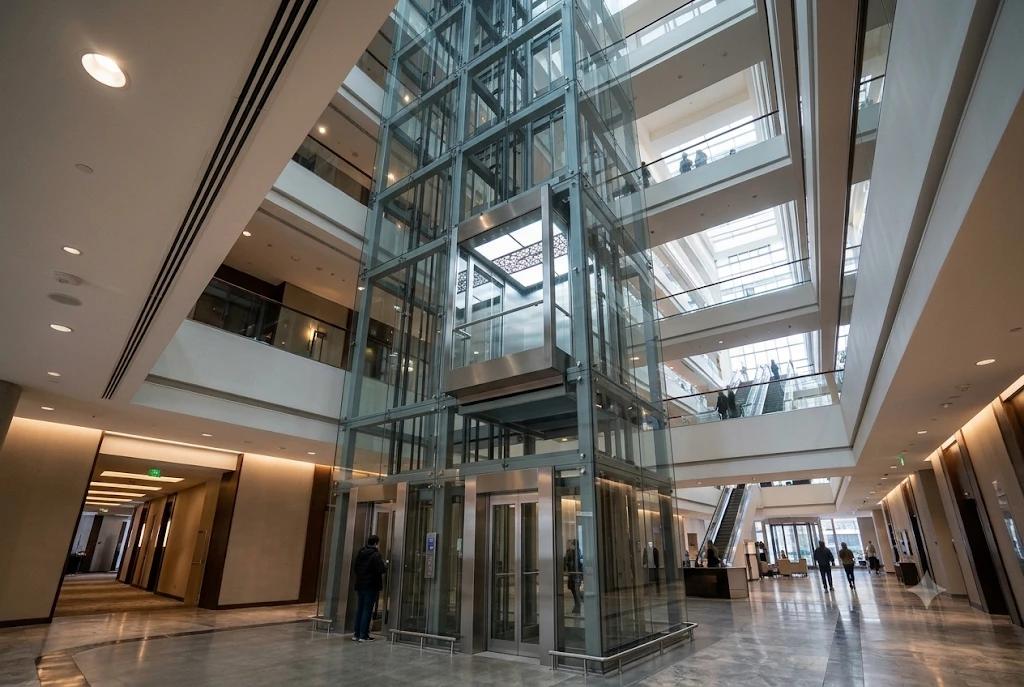
A guided 3D configurator where buyers choose a platform, enter building specs, and set capacity, entrances, doors, speed and cab height, watching the elevator take shape in 3D on the site itself. Completing it unlocks the matching pit, hoistway and shaft drawings.
One place for event information, token and store sales, member accounts and a forum, volunteer sign-ups and news, plus a members' guild program with its own benefits.
Writing software is the quick part now. AI tools draft code, tests and documentation in hours. What still takes experience is checking that the result does what you asked, copes with the awkward cases and is safe to put in front of customers. That checking is our job, and we do it at every step.
STEP 1
Agree what “done” means
We write down the problem, the users, the rules and what success looks like, plus which decisions need a person’s approval. You sign it off before anything is built.
ProblemSuccess criteriaApprovals
STEP 2
Plan before code
An engineer writes the plan: what changes, in what order, and which tests will prove it works. Building starts once the plan is approved.
PlanOrder of workTest plan
STEP 3
Build with AI, inside guardrails
AI does the implementation in its own branch, with only the access it needs. Tests run on every change. If a test fails, the code gets fixed. The test stays as it is.
Own branchScoped accessTests on every change
STEP 4
A person reviews it
Automated review catches the obvious problems first. Then an engineer checks intent, risk and security. The AI that wrote the code has no way to approve it.
Automated reviewEngineer reviewSecurity
STEP 5
Release with a name on it
Every production release is signed off by a named person on your project.
Sign-offRelease checks
STEP 6
Watch it, and learn from it
After launch we track errors, answer quality, speed and running cost. When something goes wrong, it becomes a new test, so the same failure gets caught next time.
ErrorsAnswer qualityRunning cost
For AI features
Evals on every agent.
Each agent is checked against a set of real tasks from your business, and re-checked whenever the prompt, the model or your data changes.
Nothing hidden
All of it in your repo.
Every spec, plan, test result and review note lives in your own repository, so you can see what was decided and why.
One task, a working prototype on your real data and an honest verdict. You get the test results showing how often it gets things right, an estimate of the monthly running cost and a clear recommendation to go ahead or stop.
→
02
Build it properly
We build it out in milestones. A milestone is finished when it passes the tests you agreed and you’ve signed it off.
→
03
Run it and improve it
After launch we watch quality, speed and cost, fix what breaks and keep making it better as your business changes.
If the pilot shows AI isn't the right fit, you find out before paying for a full build.
Your MVP came together fast with AI tools or a freelancer, and now nobody wants to touch it. We review the code, add the tests it’s missing, close the security gaps and set up release checks, so your team can build on it with confidence.
Engineers who join in days and bring our way of working with them: written specs, approved plans, AI-assisted builds and real review. You meet and interview them first.
We build AI chatbots, AI agents, MCP servers and workflow automation for your product or your operations, on the leading models and engineered, tested and monitored like any other production software.
We build AI chatbots, AI agents, MCP servers and workflow automation for your product or your operations, on the leading models and engineered, tested and monitored like any other production software.
✓ Use-case workshop✓ Model and data choice✓ Evaluated prototype✓ Monitored release
02AI discovery & consulting
03AI automation & workflows
04Application modernization
05Customer experience
06Software development
Impact
The team behind the work.
200+
projects delivered for teams worldwide
01 / 03
$ dapton stack --list
✓ Models: Claude, Gemini, OpenAI
✓ Agents: LangChain, LangGraph, MCP
✓ Data: PostgreSQL, Supabase, Redis
● Build: Next.js, Python, Cursor, Copilot
Built for
FintechE-commerceMediaGamingAgenciesStartups
01
AI agents for support & sales.
Automations that clear the manual work.
MCP servers for your product.
Document & email AI.
New AI products, start to launch.
AI-native. Human at the core.
Every release signed off by a person.
Your code, your repos, your cloud.
Tested before launch. Watched after.
Engineers join in days.
AI-native. Human at the core.
Every release signed off by a person.
Your code, your repos, your cloud.
Tested before launch. Watched after.
Engineers join in days.
AI-native. Human at the core.
Every release signed off by a person.
Your code, your repos, your cloud.
Tested before launch. Watched after.
Engineers join in days.
AI agents for support & sales.
Automations that clear the manual work.
MCP servers for your product.
Document & email AI.
New AI products, start to launch.
AI agents for support & sales.
Automations that clear the manual work.
MCP servers for your product.
Document & email AI.
New AI products, start to launch.
Questions
Askbefore youstart.
The questions we hear before every AI project. Pick one to see how we answer it.
We've never used AI. Where do we start?
With one task. On a free 20-minute call we ask what the work is, which tools it touches and what data it needs. Then we tell you whether AI can take it on and what a pilot would involve.
Which AI model will you use?
The one that does your task best. We work with Claude, Gemini, OpenAI and open models, compare them on a test set built from your own examples and pick on accuracy, speed and cost.
Will it work with our tools?
Share your stack, API documentation and access constraints. We assess the integration and explain any changes needed before agreeing the scope. Where it helps, we build an MCP server so AI assistants can use your software safely.
Can it run in our own cloud?
We can work in your repositories and hosting accounts using scoped access, so the code and the running system stay in your accounts.
What will it cost to run each month?
We estimate the running cost during the pilot and track spend after launch, alongside quality and speed.
What happens when the AI gets something wrong?
Before launch, every agent is tested against real examples. In production, limits control what it is allowed to do, and anything costly or unclear goes to a person with the context attached. These checks reduce mistakes. No one can promise an AI will never make one, which is why people stay in the loop.
Who owns the code?
You do. Repository ownership, credentials, intellectual property and access permissions are agreed in the contract, and we work in your accounts.
How soon can we start?
After a first conversation we confirm the scope, the team and a realistic start date. Access to your systems and data is usually what sets the pace.
Common questionsAnswers
We've never used AI. Where do we start?
With one task. On a free 20-minute call we ask what the work is, which tools it touches and what data it needs. Then we tell you whether AI can take it on and what a pilot would involve.▍